Utah Digital Twin Lab · Kahlert School of Computing

Provably-accurate, scalable scientific machine learning

We build the models that digital twins run on: operator learners, structure-preserving networks, and high-order meshless solvers, for scientific discovery and engineering.

6active grants
5sponsors
6PhD students & postdocs
43papers & preprints
What we do

From numerics to digital twins

The Utah Digital Twin Lab (UDTL) develops provably-accurate, scalable scientific machine learning architectures that help create digital twins for scientific discovery and engineering. We work where scientific machine learning, scientific computing, high performance computing, and applied mathematics meet.

A useful digital twin has to be fast enough to query thousands of times, faithful to the physics it represents, and honest about its own error. We pursue all three, building on two decades of work on kernel and meshless methods.

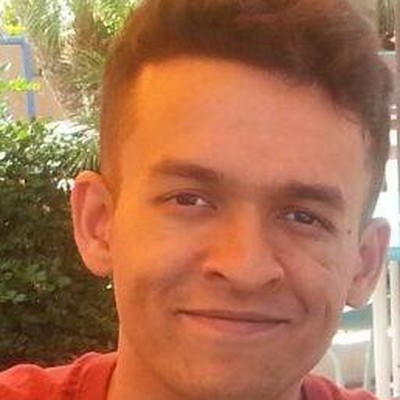
Varun Shankar
Lab director

Varun Shankar

Assistant Professor, Kahlert School of Computing, University of Utah. Varun works on scientific machine learning, kernel and meshless numerical methods, and high performance computing. He received his PhD in Computing from Utah and was a postdoc in Utah's Department of Mathematics.

Funding

Supported by

All active grants →

Collaborative Research: Unified Neural Operator (UNO): Towards Trustworthy Operator Learning for Scientific Applications

DMS / CISE — Computational & Data-Enabled Science (CDS&E) · PI Varun Shankar; Co-PI Akil Narayan

2025 – 2028
PI FA9550-25-1-0042

Property-preserving and multiscale operator learning for surrogate modeling

Laboratory Research Initiation Request (LRIR)

2024 – 2027
PI

Numerical methods and scientific machine learning for composite materials and structures

Air Force Research Laboratory (subcontracts via UES and ARCTOS)

2023 – 2027

Recent work

All →
  1. The Frame Kernel Method for Multiscale Operator Learning Branden Frieden, Ryan Whitehead, Keith Ballard, Robert M. Kirby, Varun Shankar
  2. A high-order, meshless, Lagrangian–Eulerian RBF-FD method for advection–diffusion–reaction on moving manifolds Matthew Lowery, Grady B. Wright, Varun Shankar
  3. Neural Operators for Design-Space Surrogate Modeling of Tendon-Actuated Continuum Robots Branden Frieden, James M Ferguson, Alan Kuntz, Varun Shankar IEEE International Conference on Robotics and Automation, ICRA, 2026
  4. Kernel Neural Operators (KNOs) for Scalable, Memory-efficient, Geometrically-flexible Operator Learning Matthew Lowery, John Turnage, Zachary Morrow, John D Jakeman, Akil Narayan, Shandian Zhe, Varun Shankar Transactions on Machine Learning Research, 2026
  5. Polynomial-Augmented Neural Networks (PANNs) with Weak Orthogonality Constraints for Enhanced Function and PDE Approximation Madison Cooley, Shandian Zhe, Robert M Kirby, Varun Shankar SIAM Journal on Scientific Computing, 2026
  6. Localized Operator Learning with Adaptive Partition-of-Unity Mixture-of-Expert Networks Madison Cooley, Ramansh Sharma, Shandian Zhe, Robert M. Kirby, Varun Shankar

News

  • Sep 2026Varun gave an invited talk on multiscale kernel frames for operator learning at the Banff Workshop on Kernel Approximation and Gaussian Processes, and chaired its panel on kernel/GP software.
  • Sep 2026Varun joined the editorial board of Nature Scientific Reports.
  • May 2026New NSF/DOE CS2 award (with Ben Greenman and John Regehr): on-demand semantic analysis via program synthesis.
  • 2026Kernel Neural Operators (KNOs) published in TMLR; PANNs published in SISC.
  • 2026Neural-operator surrogates for tendon-actuated continuum robots at ICRA 2026 (with Alan Kuntz's group).
  • Sep 2025New NSF award (PI): Unified Neural Operator (UNO) — towards trustworthy operator learning for scientific applications.
  • 2025Congratulations to Dr. Madison Cooley on completing her PhD!